PLEET Environment
Energy Consumption Summary
✅ Get an overview of your energy usage
✅ Document your carbon footprint
✅ Identify and reduce energy waste
PLEET Environment – Get a complete overview of energy consumption and your carbon footprint
With PLEET Environment, you gain insight into where energy is actually being used in your production process. Instead of relying on educated guesses, you get valid data that allows you to optimize operations, reduce energy waste, and document your carbon footprint.
Overview of Energy Consumption Throughout the Entire Production Process
Many manufacturing companies lack a clear picture of their energy consumption. PLEET Environment collects data in real time and provides you with a detailed overview of energy consumption across your entire production process.
You can measure and analyze:
- Electricity Consumption
- Water Consumption
- Compressed Air and Other Energy Sources
Data is collected at high resolution—down to the minute, 24/7—so you always have an accurate picture of your usage.
Track energy consumption throughout the entire production process using the order number
With PLEET Environment, you can track energy consumption throughout the entire production process using the order number. This gives you a clear and comprehensive overview of where energy is used—from start to finish in the production process.
By linking energy data to individual orders, you gain insight into where energy consumption is highest during production. This makes it possible to identify energy-intensive processes and focus your efforts on optimization.
Among other things, you can:
- Track energy consumption across the entire production process for a specific order
- See exactly where in the process energy consumption peaks
- Compare energy consumption across different orders
- Make decisions based on concrete data rather than assumptions
The result is a better overview, more efficient production, and a stronger foundation for both optimization and sustainability initiatives.
Identify energy waste and reduce costs
When you know where energy is being used, it also becomes clear where it is being wasted. PLEET Environment helps you identify energy waste and enables you to reduce it in your production processes.
You’ll gain insight into:
- Energy consumption during production vs. standby
- Inefficient processes and hidden waste
- Optimization Opportunities at the Machine and Line Levels
The result is lower costs and more efficient production.
Document Your Carbon Footprint and Strengthen ESG Reporting
Documentation requirements are increasing—and data plays a crucial role here. With PLEET Environment, you can document your carbon footprint based on actual measurements.
Among other things, you can:
- Calculate the estimated CO2 equivalent
- Track energy consumption for specific orders
- Support ESG reporting with valid data
It strengthens both your credibility and your ability to make sustainable decisions.
Gain insights at every level
PLEET Environment provides you with a flexible and detailed overview of energy consumption, allowing you to analyze exactly the level that is relevant to your business:
- Energy consumption for a specific order number
- Consumption on a specific machine or production line
- Data for a selected period
- Total consumption for a department or machine group
When you can link energy consumption directly to production, you gain a powerful tool for both optimization and pricing.
Easy integration with existing meters
Have you already installed energy meters? PLEET Environment can communicate with the vast majority of submeters on the market, so existing equipment can be reused. This makes implementation both fast and cost-effective.
Reporting and Data Sources for Further Analysis
With just a few clicks, you can generate reports and extract data for further analysis. The system makes it easy to work with the data—both internally and externally.
Examples of reporting:
- Total Energy Consumption
- Energy consumption per order across machines
- Energy Consumption of a Machine Over Time
- Estimated Carbon Footprint
Data-driven insights that drive action
PLEET Environment makes energy visible. And when energy consumption becomes visible, it also becomes possible to take action.
You don’t just get data—you get a basis for decision-making that makes it easier to reduce consumption, optimize production, and strengthen your company’s sustainability.
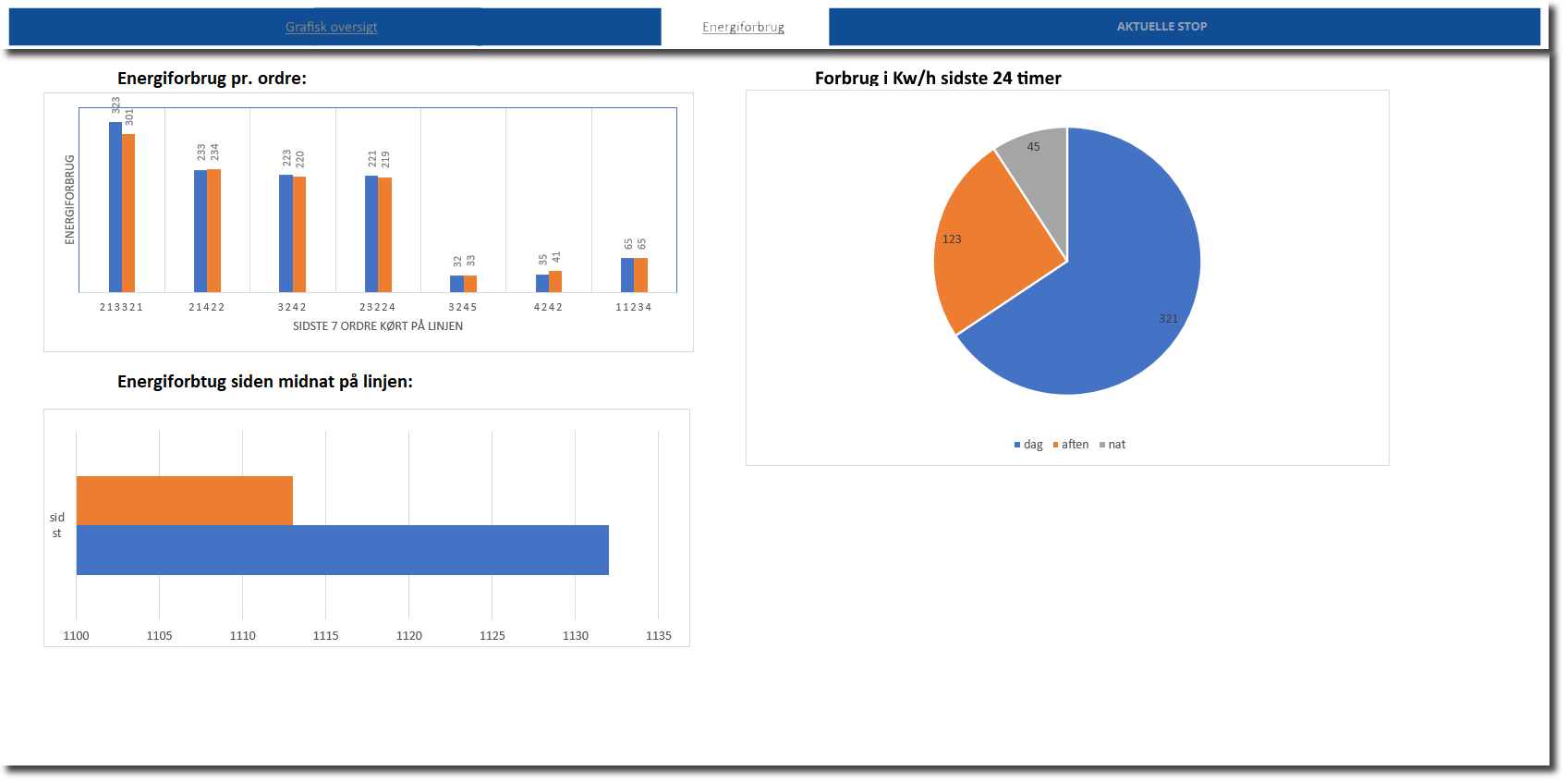
Overview of Energy Consumption per Order per Line
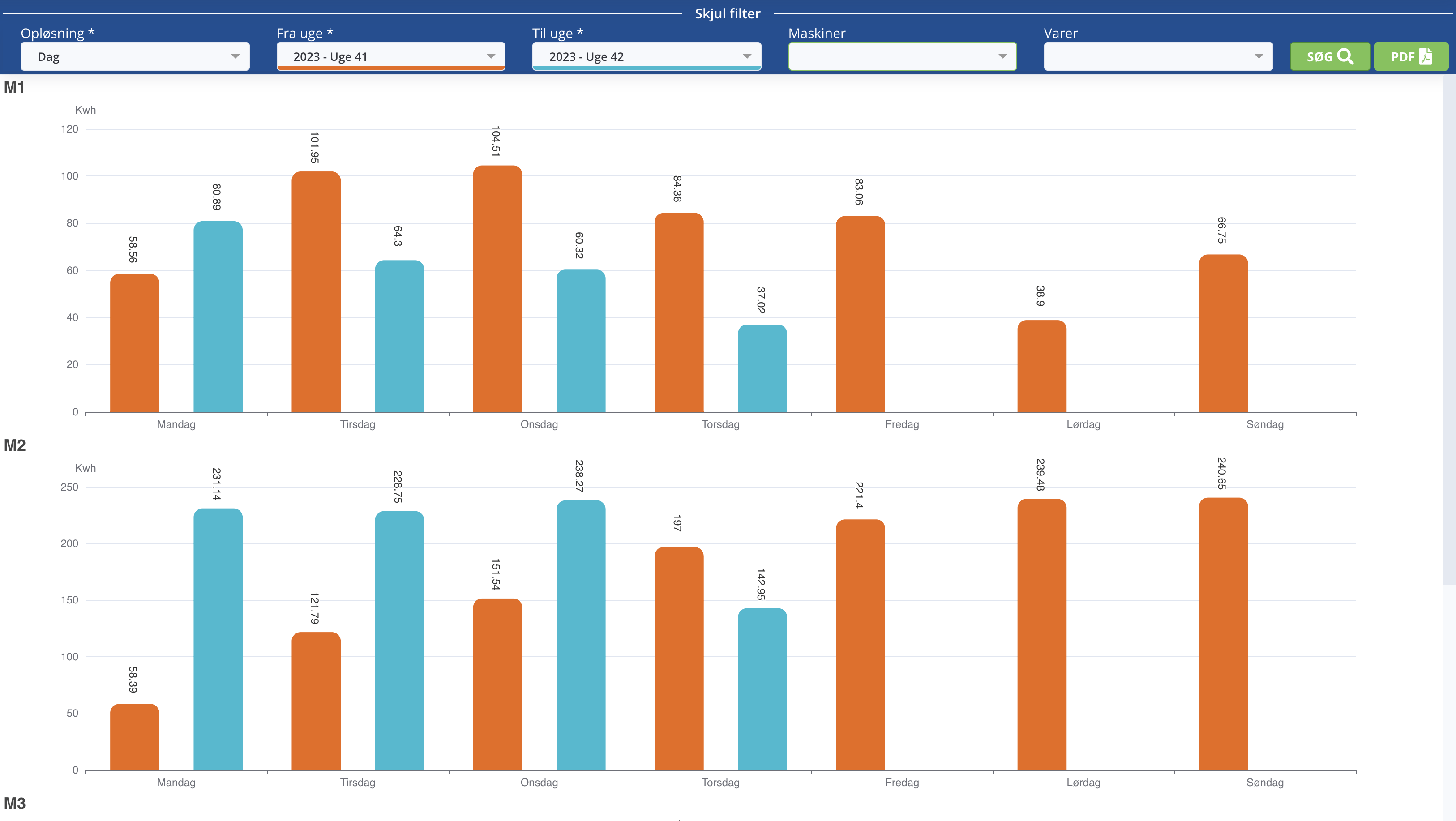
Historical Overview of Total Usage Across All Machines
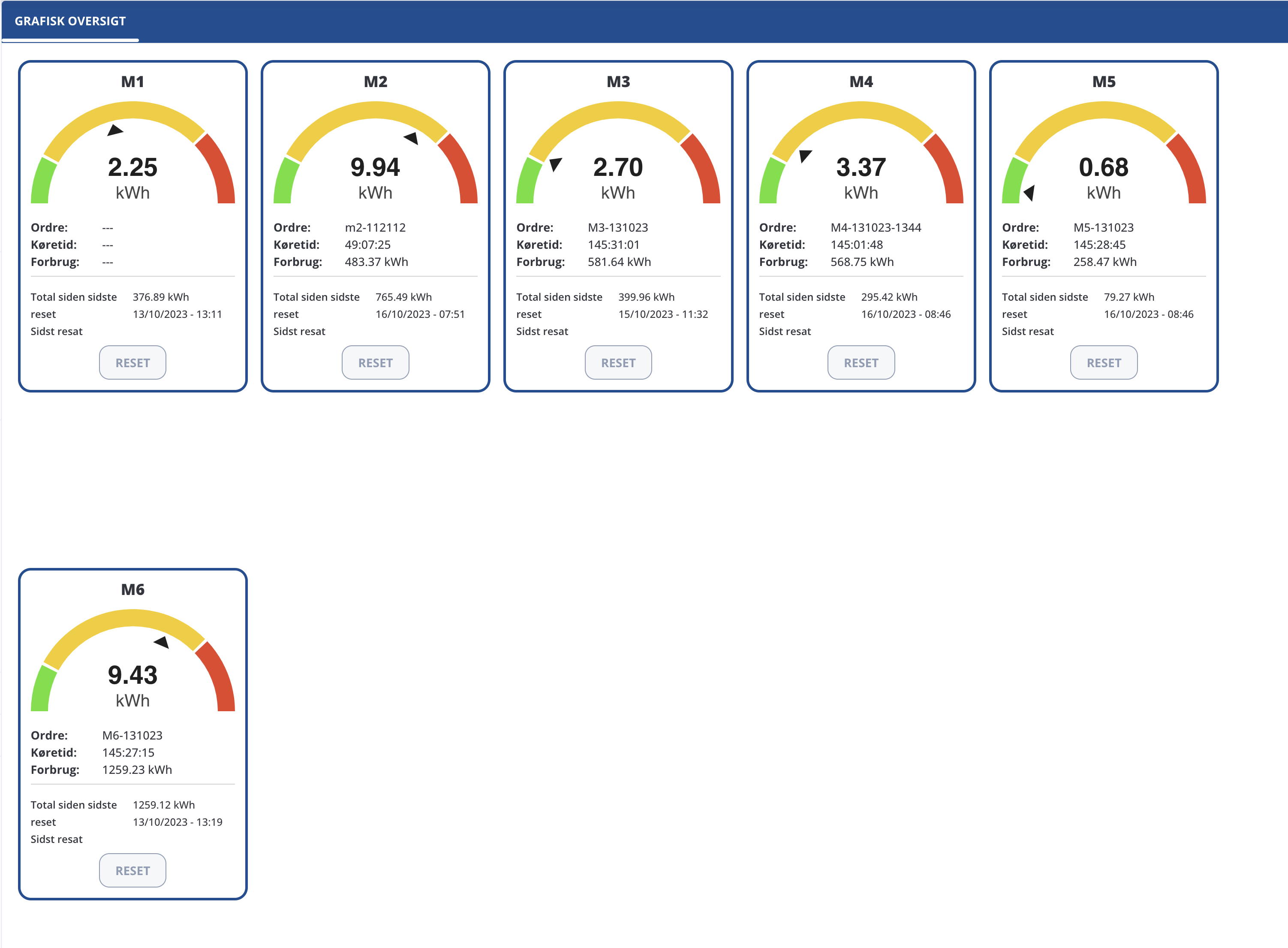
Real-time overview of energy consumption for all machines
Energy Consumption Overview – Per Hour. Real-Time Measurement
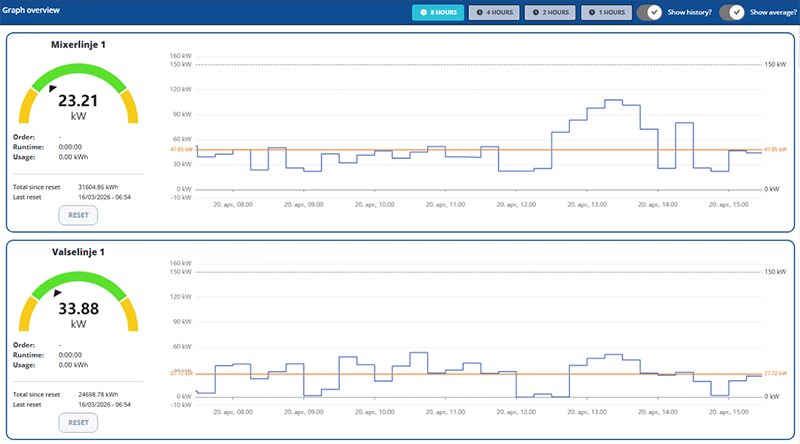
Overview of Energy Consumption for a Specific Period – Real-Time

Real-Time Energy Consumption Overview

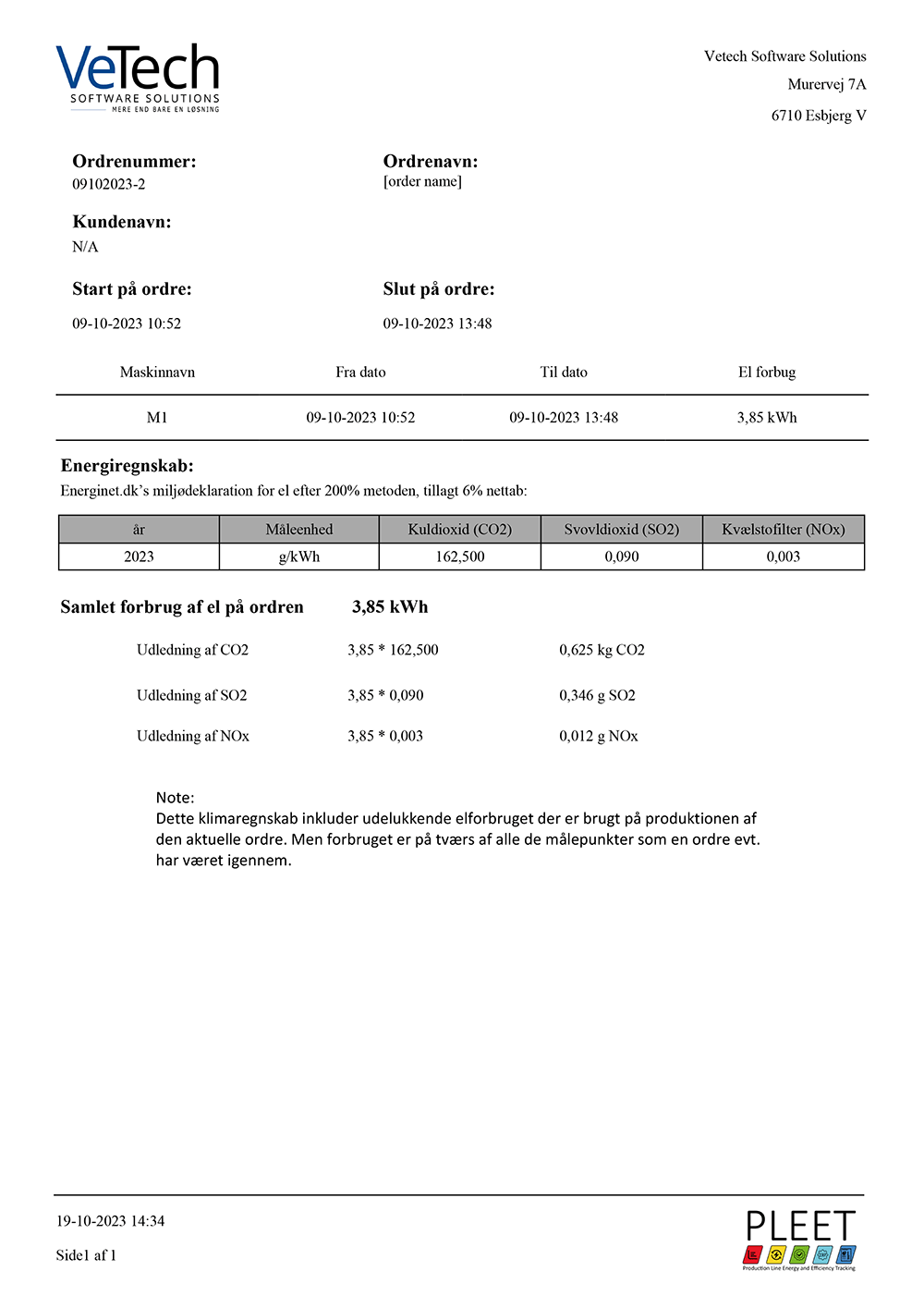
Get data for your CO2 accounting
All of this is easy and simple in PLEET. With just a few clicks, you can generate a report showing the total consumption for an order.
In addition, a report can be generated that shows
- Total energy consumption.
- Estimated CO2 equivalent.
- Total energy consumption for an order involving a combination of different machines.
- Total energy consumption of a machine over time.
Why is PLEET-Environment a powerful tool for your CO2 accounting?
Click the arrows to expand the explanations.
Demonstrates environmental responsibility
By tracking your company’s environmental impact, you demonstrate that you take your environmental responsibilities seriously. This is important to both internal and external stakeholders and can enhance your company’s reputation.
Collecting energy consumption data opens up opportunities
Collecting energy consumption data makes it possible to identify inefficient processes and areas where energy savings can be achieved. This can lead to cost savings and reduce the company’s carbon footprint.
Meets the new ESG requirements
With the new ESG requirements, it can be difficult to demonstrate compliance with both regulatory and customer requirements unless you collect data on your energy consumption.
Helps optimize across many parameters
Energy consumption data helps optimize resource allocation. It also helps reduce waste, improve efficiency, and increase productivity.
Do you have any questions? – Contact us today

